
 Follow Paper on LinkedIn
Conducting a research project when your team is working asynchronously
An article all about how we met a team of international volunteers, how we structured a project that would give them some research, and upskill them - without ever meeting and with only an hour together a week.
We’ve already talked a little bit about our work with Opt Out Tools but it was fascinating work in many ways, so I thought I would also write up how we met the Opt Out team, how we structured our work together and some of the challenges we faced doing leg-up work with international volunteers.
If you like, you can read our previous articles related to Opt Out which are about how we protected ourselves and our participants while working on a difficult subject and the steps we took when our social media recruitment went awry
What the heck is leg-up work?
For those of you who aren’t familiar with this Paper principle, we offer free leg-up work to charities, small businesses and social enterprises. Everyone at Paper is encouraged to keep an eye out for work that we might do to help an organisation who are doing good work but can’t afford the expertise that we have.
For this project we made the decision to set a goal rather than to timebox how long we would work on the project. It gave us the opportunity to do our best work without rushing, and meant that we wouldn’t leave the team with half-finished work.
We also made sure that this project followed the same standards that we set on our paid projects - we qualified it in using our regular sales criteria, we built coaching on how to use our findings into the scope, we scheduled and tracked our time on it and we always made sure that there were at least two Paper people working on it.
Back to Opt Out Tools
Back in June 2020 I saw a message on a Slack group asking for some help from researchers and designers to improve a tool which aimed to help women engage with online discussions without receiving abuse. The tool itself is a firefox browser extension which uses an algorithm to identify and hide misogynistic abuse on Twitter - it’s like an adblocker for misogyny.
As someone who is passionate about feminist issues, I instantly felt like this was something that I wanted to be involved with and pitched the project to Paper as something we should offer leg-up work to.
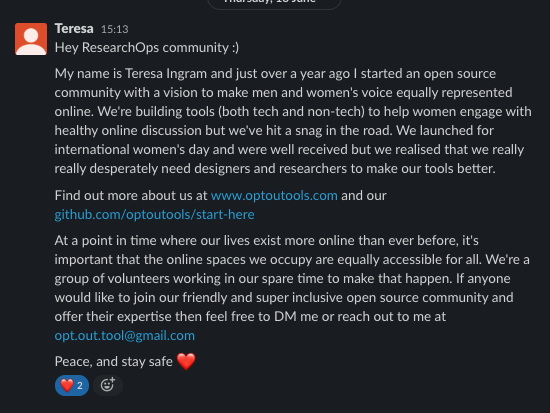
The Slack message that led us to Opt Out
The Paper team (unsurprisingly) were very on board with us taking on this work and agreed that we would commit to it, and thanks to some calendar magic we managed to involve Cam and Beth in the project as well.
We initially agreed that we’d take on a small research project for them, but have a focus on upskilling and mentoring the core Opt Out Tools team so that they could run a similar project in the future.
Let’s get this project started
One of the first things we talked about as the Opt Out x Paper team was our availability. The team from Opt Out are volunteers, we didn’t want to over burden them with meetings but we did need regular time together so we could get all the information we needed to do great research for them. Schedules were difficult, especially given that we were working across three time zones as well! We agreed on a regular slot that we would all commit to and one of the points on that agenda was to agree how much time we needed the following week and when we might be able to organise it.
Our first step was to make the activities that we normally cover in a week-long inception fit into two 90 minute workshops. We knew the topic we were dealing with would be difficult so we had to be sure that we were all comfortable working together.
Then we got down to the knitty gritty research planning stuff. Some of the Opt Out team hadn’t been involved in user research before so we made sure that we were clear what we were asking and how we would use the information.
We focussed on who we thought the users of Opt Out were and who could/ should be users of Opt Out. Then we thought about what things we wanted to know by the end of the project. We talked through;
- Who do they think their users are, and what they thought they are like
- What facts they think about when they revisit the need behind Opt Out Tools
- Any guesses they made when they created their tools
One of the main objectives for this work was to upskill some of the core Opt Out team on user research planning and execution, but we had not done this for a project where our time together was so sparse. In order to make the learning elements more accessible, I regularly filmed myself conducting tasks, always explaining what I was doing and why I was doing it.
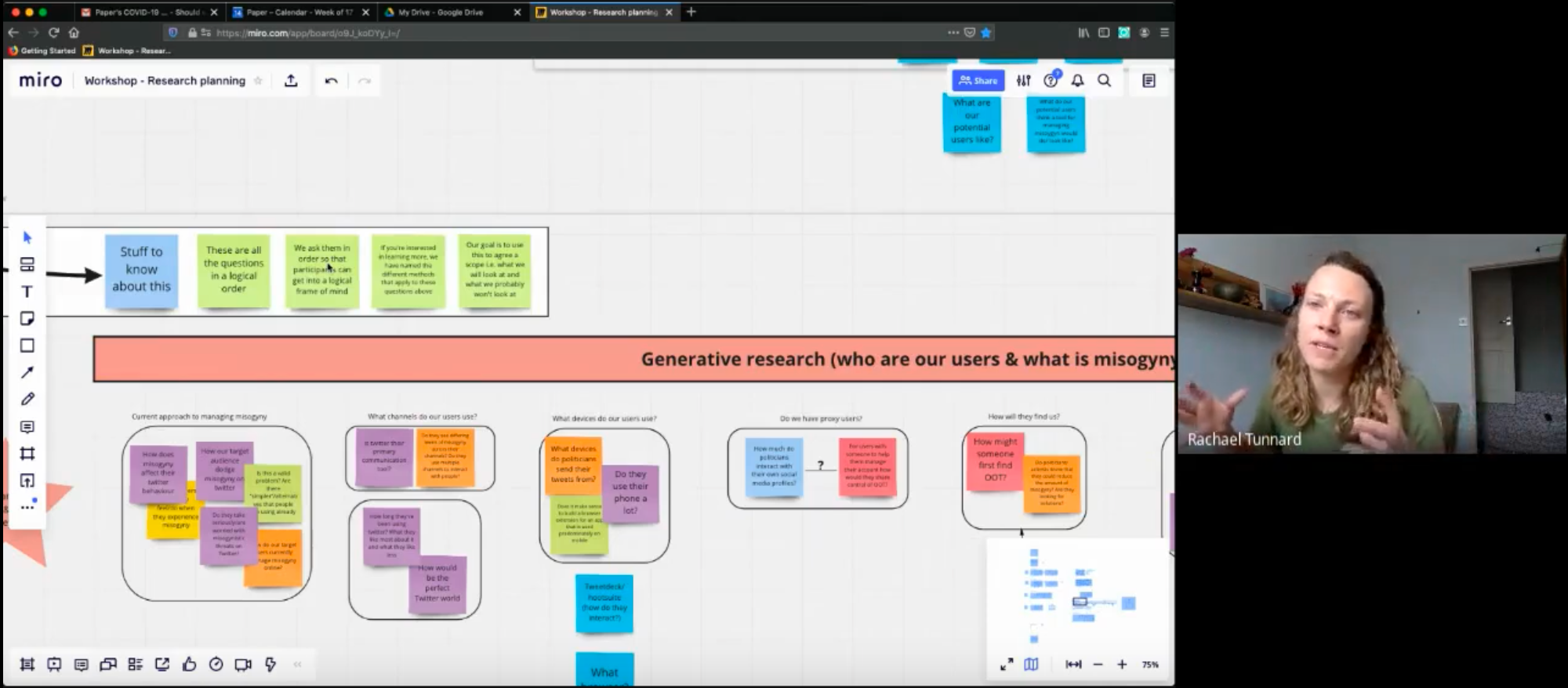 A video of me explaining how I was going to use the work we’d done that day
Challenging our own understanding of misogyny
One of the first challenges we found when we were designing our research was that we were actually finding it quite difficult to express what we thought misogyny meant. We danced around about whether it’s sexism, but worse, or completely different? We didn’t feel comfortable asking participants how they define misogyny and to give us an example of when they’ve experienced online misogyny if we don’t even know what that might mean.
We paused our research design while we worked with Opt Out to understand how they defined misogyny and did some further desk research to solidify the concept in our own minds. We got to a place where we all felt comfortable defining misogyny and giving an example of what misogyny is but always felt we understood it most when we talked about it alongside sexism. Bringing sexism into the definition helps to contextualise what is happening as misogyny is the ‘footsoldier’ of sexist and patriarchal structures in our societies. Like our friends at Opt Out said, “Sexism wants us to believe those power relations are normal and make good sense. Misogyny, on the other hand, comes into play to enforce this system when it’s at threat”. If you’d like to know more, they recommend reading this interview with Kate Manne where they discuss the differences between sexism and misogyny.
This is the example we found helped us understand it the most, and is the example we used during research sessions;
An example of sexism is: women being paid less than men
A related example of misogyny is: arguing that women should get paid less because they don’t do as much work as men or that their work is of a lesser quality.
We decided to include this definition in our research to put our participants at ease if they struggled to define what misogyny means. While I’m sure there’s an argument for not sharing our own definitions with participants so that we bias them less, it was a particularly helpful tool for some of our participants. Some were well versed in feminist literature and could comfortably define misogyny, whilst others found the concept more opaque. Having a definition to share which gave us all an equal starting point for a difficult discussion about a sensitive topic.
Working together when time is sporadic
One of things that was really challenging for all of us was the fact that we didn’t have a full-time dedicated team to work with. We had so much energy, passion and joy for the work that we were doing which made the time apart easier to manage, but it isn’t ideal. We often talk about how important it is for whole teams to be involved in user research (it’s a team sport after all!) but as we were working with volunteers who had separate, full-time jobs it simply wasn’t practical. We were reliant on Slack for communication and regularly had to do asynchronous activities to get the information we needed to get the project up and running. We got all the same information, but it took us longer and we might have missed opportunities to have conversations which may have sparked interesting discussions as a whole team.
I have never appreciated agile ways of working as much as I did planning a research project without a daily standup and easy access to my team’s knowledge on the subject.
I don’t want anyone reading this to believe that we didn’t make everything work for our time-challenged and dispersed team though. In the circumstances I believe that we did an exceptional job!
The things that we found particularly helpful as we worked asynchronously were;
- Our weekly catch-up which covered important dates, the big changes and how we were all finding the work that week
- Checking before we did any work. This was particularly important for the volunteers who were giving up their lunchtimes and evenings to do this work
- Writing up everything that we had done for the project after we had finished doing it. Even if we had just made a minor tweak to a board we annotated what we had done. This made handovers much smoother
- Weeknotes even when everything in them had been discussed as it happened and at the weekly meeting
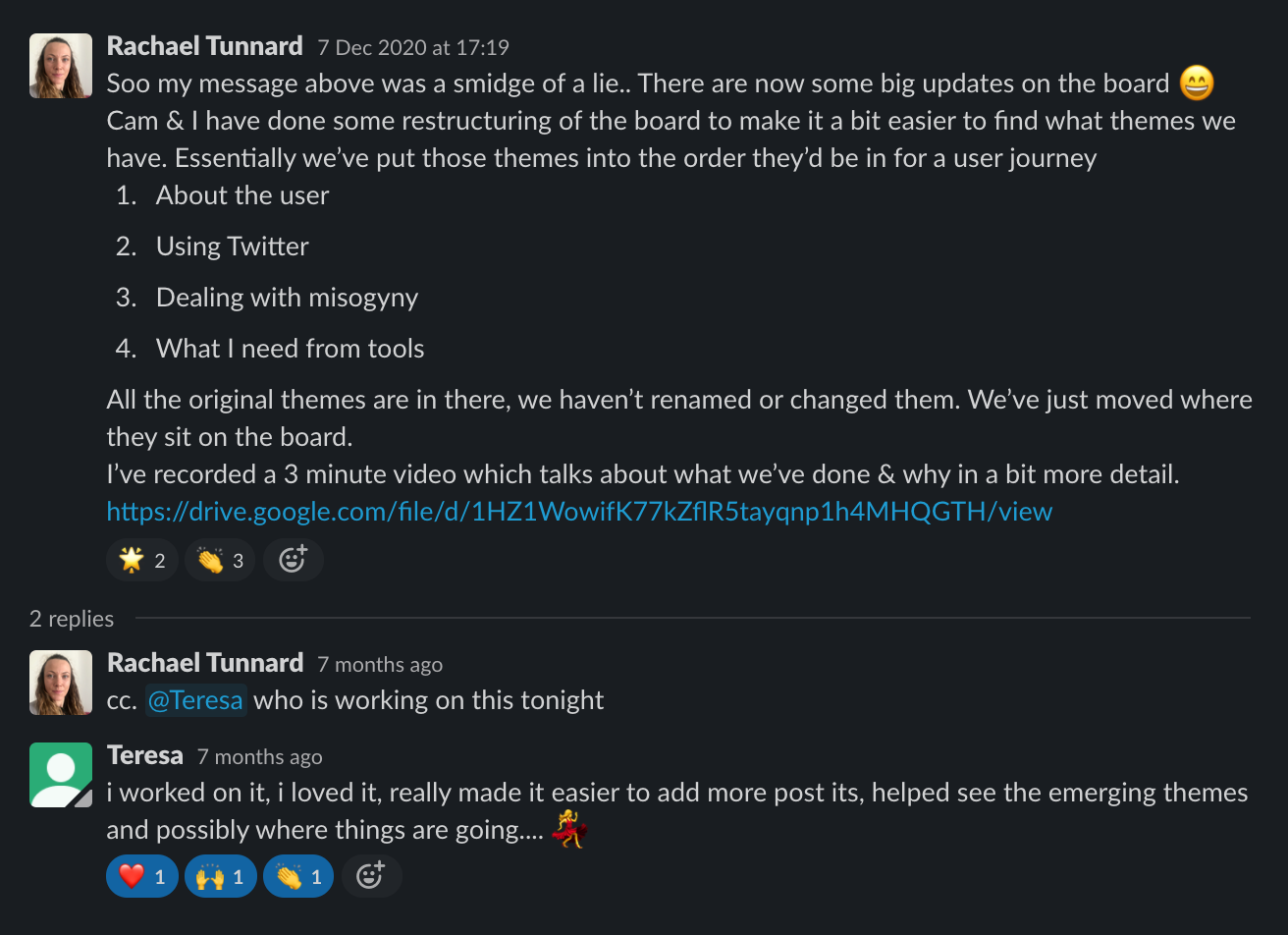 A daily update I sent to the team
How we managed our handover
After our research was finished we needed to parcel everything up for the Opt Out team to be able to complete, and here is where we hit another new learning experience for us… Handing work over to an open source project.
We always make sure our findings are understandable to people who may be new joiners to the team that we worked with, or teams who had to take a break between working with us and picking the work back up again. For an open source project like Opt Out people may just join for a few weeks, they may never meet the core team of maintainers we spoke with or they may just find their way to github and want to know more. So we needed to make sure that our findings could be understood and used by someone who had had minimal onboarding from the team.
We solved this problem by creating handover documents which detailed;
- What the finding is
- How we learned about it
- What we learned
- When to use the output
- What we might do next
If you’re working on research asynchronously
While I won’t say that I am a convert to the idea of working on a research project without access to a client throughout the day, I am immensely proud of the quality of work we all did and how well we all worked together on it.
If you’re about to embark on a research project where you won’t have regular access to your client, or where your client is doing this project work on top of a million other tasks these are my main learnings;
- Be clear from the start about what commitment you can make - it’s OK if it’s an hour a week, but make sure you can always be there for that hour
- Set expectations - let everyone know what you’ll need from them and why you need it
- Prep, prep, prep for every meeting in advance - you won’t have the luxury of being able to reschedule if you don’t get through everything
- Document and record everything - you may not be able to share what you’re doing live, but you can certainly give the rest of your team the insight into what you did