2. Poor captioning stopped Deaf participants feeling suspense

There were multiple factors that caused participants to stop feeling suspense.
If the captions were confusing, distracting, or too complex, the participants had to work harder to understand what was happening, which interrupted their feeling of suspense.
“I think because I struggled to process it all. I don't think I had that sense of suspense, no. No, because I was trying to work out what was happening.” Participant 2, interpreted from BSL (The Hunchback of Notre Dame)
During the interviews, we asked about key moments in the clips where sound was a central element to the plot. We found that certain key information was not clearly translated in the captions, and participants told us that they were unaware of what the descriptions of sound were trying to convey.
For example, in Jaws, the participants were aware that there was “famous” music in the clip, but they told us that the captions did not convey that the music represented the shark getting closer.
Likewise, in A Quiet Place, a caption that reads [silence] appears when the film shows hearing audiences how a Deaf character experiences sound through their cochlear implant. The participants knew the character was Deaf, but it was unclear what the silence represented. Many participants thought that this caption was describing the environment.
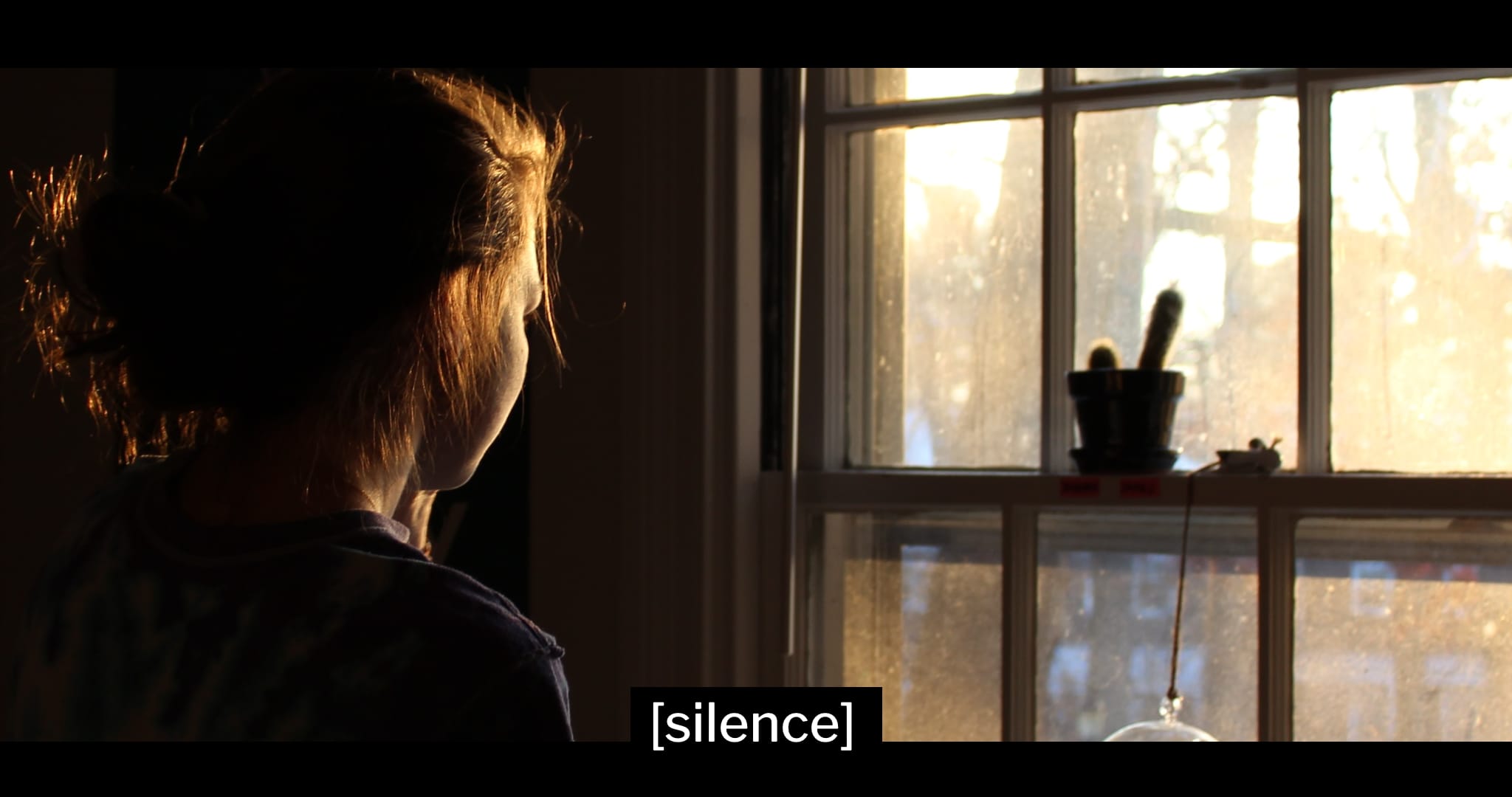
An example screenshot of A Quiet Place (captions from Netflix)
“I didn't know her cochlear was broken. [...] there was no information to indicate that particularly in the clip. No, I was not aware.” Participant 13, interpreted from BSL (A Quiet Place)
On the Jaws theme: “No, I’m not aware of anything of that information in the subtitles. That didn't translate in the subtitles for me.” Participant 12, interpreted from BSL (Jaws)
Complex language made it difficult for participants to feel connected to the film and understand the music.
For example, they described how the use of Latin and French in the captions “went straight over my head” and old fashioned words made it feel like they were “reading Shakespeare”.
This happened often in The Hunchback of Notre Dame, a Disney musical, where the characters speak and sing to each other interchangeably. The captions, like [choir vocalising], did not effectively translate what the music was doing or how the characters sing. The complex language found across the lyrics and descriptions of the music caused most participants to feel confused, disconnected and unable to follow the plot.
“So there were some old fashioned words I think, and some French as well, and I didn't really understand those. I didn't really feel connected with that so that was harder.”Participant 13, interpreted from BSL (The Hunchback of Notre Dame)
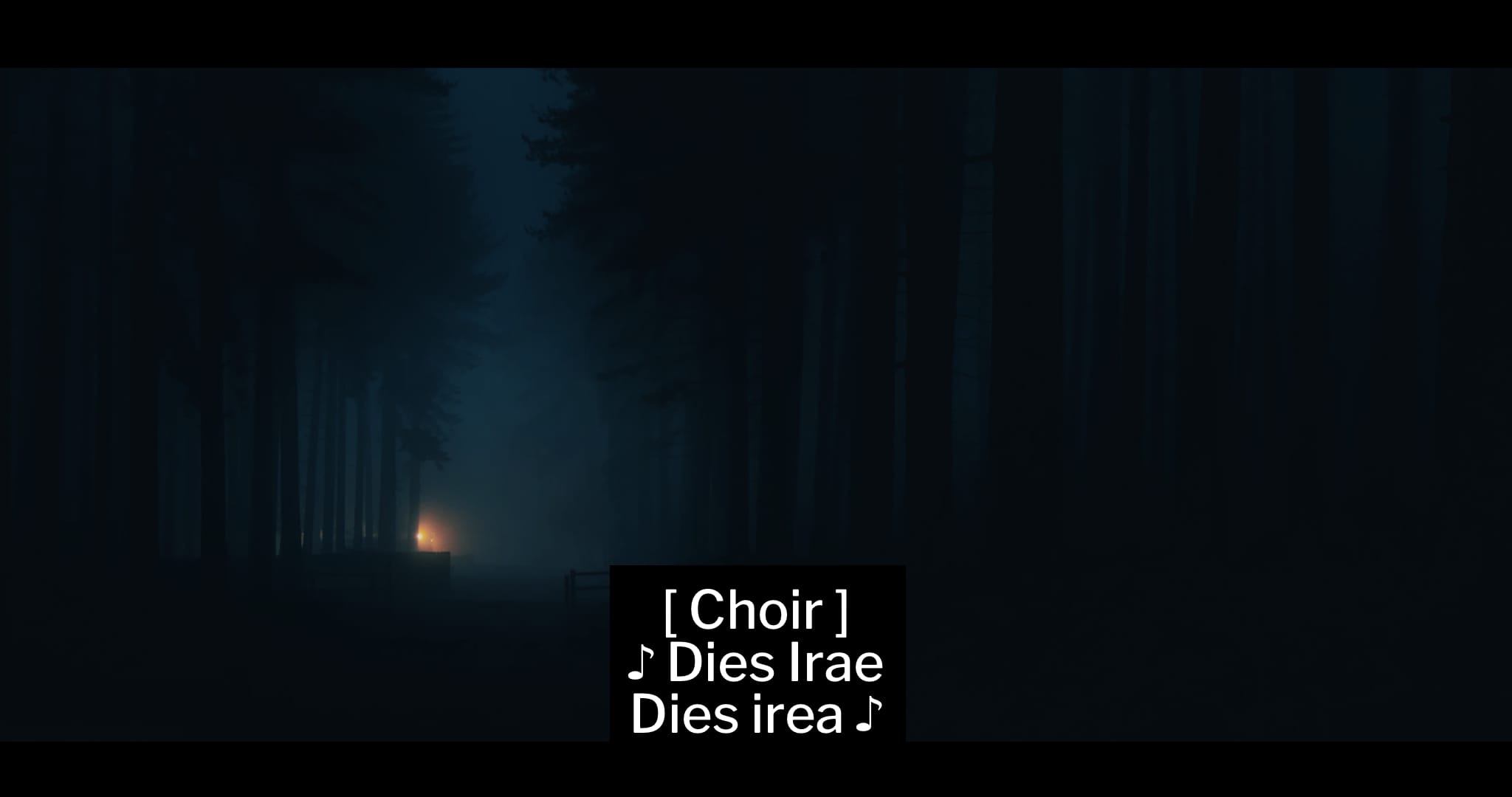
An example screenshot of Disney's The Hunchback of Notre Dame (captions from Disney Plus)
Some participants described how they had to work harder to imagine what something may sound like. This extra mental energy made some of them feel frustrated or want to “switch their brain off” when watching the film.
“So the start of the film, it said [metal clanging] and I was like... I can't hear it. So I'm trying to think what metal might sound like.” Participant 2, interpreted from BSL (A Quiet Place)
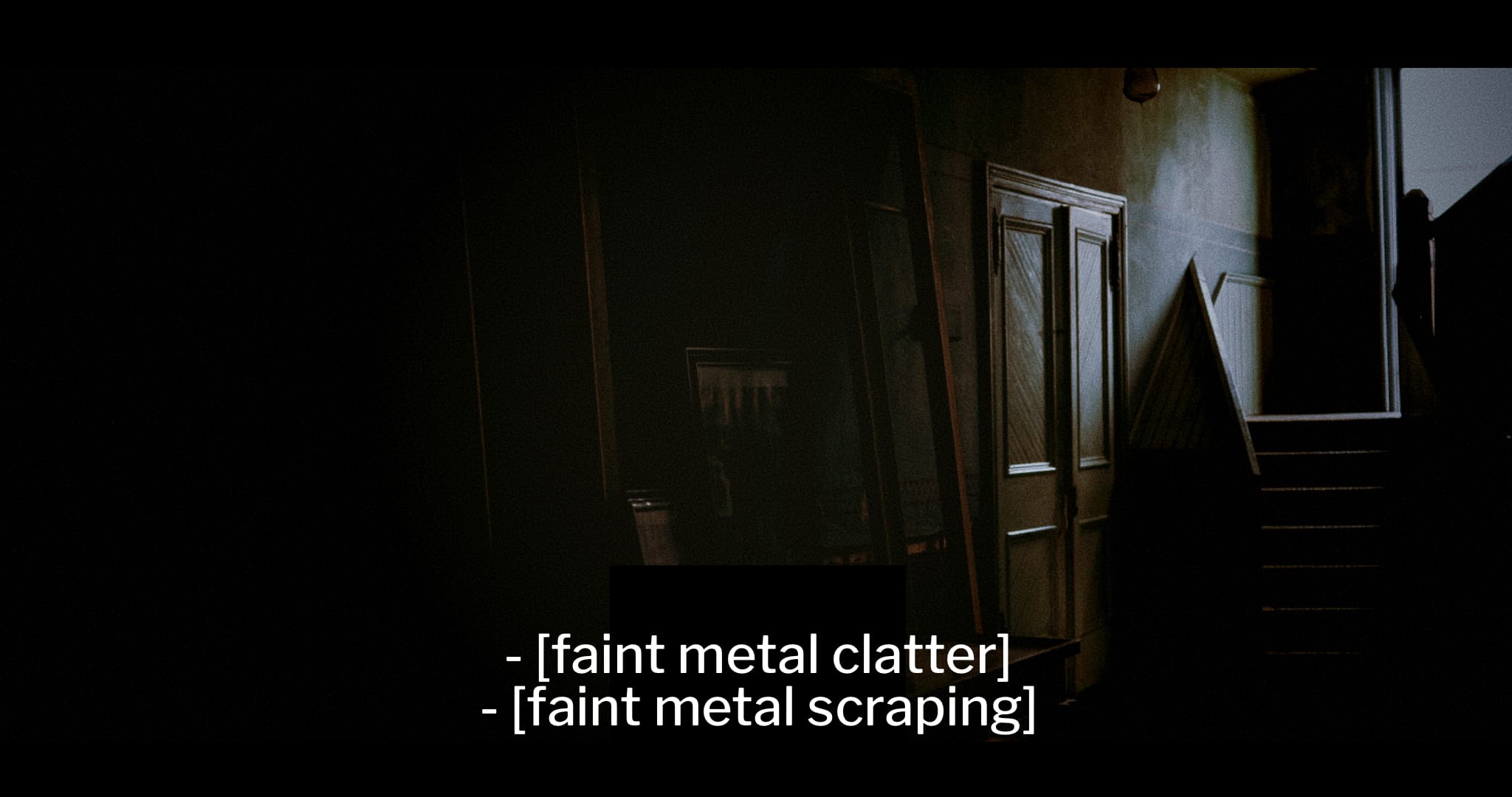
An example screenshot of A Quiet Place (captions from Netflix)
Others felt the sound and music descriptions didn’t add anything to their experience because they couldn't relate to the sounds or didn’t know what they were.
“The music didn't really mean anything to me, so it didn't add anything.” Participant 2, interpreted from BSL (The Hunchback of Notre Dame)
Participants related better to sounds like [laughing], [waves crashing], [leaves rustling] because they’d experienced them before. Other sounds were more difficult to relate to, such as [metal clanging] because they’d never experienced this sound or found it hard to visualise if it wasn’t on-screen.
“Also the description of the sounds, I don't actually know what that means. Or I can't relate to those sounds because I've not heard them. So it says something drops, but I don’t know what that sound is.” Participant 1, interpreted from BSL (A Quiet Place)
Participants explained how sometimes they encounter words that they aren’t familiar with because English is their second language. They told us that they can usually use the context to work out what a word means, or they may look up words if they have time. This disruption sometimes takes them out of feeling immersed in the film.
“There were some words that I hadn't seen before. But, if I look at the whole phrase contextually I can work it out, so what comes before and after, ‘Oh okay so this term must link to the music’, for example, or whatever the situation is, and however it's being filmed, contextually I can work out. English is my second language, [...] so sometimes I might have to pause and check a dictionary online.”Participant 8, interpreted from BSL (Jaws)
Poor captioning or visuals, such as when it’s dark or the camera is moving between people, made it difficult to recognise who was talking or who the characters were. This was especially challenging when the clip included characters talking on-screen and off-screen.
“And the man who was telling the story. I'm assuming that he was the narrator, but the priest or the woman, when they were talking with the music and then it would jump back. And then I think it went back to the narrator, but I'm not really fully clear who said what.” Participant 13, interpreted from BSL (The Hunchback of Notre Dame)
When it was unclear who was talking, participants described feeling confused, having to make assumptions, and not understanding the plot. Some participants gave details of their own strategies to help distinguish between different characters talking.
“I've got a long time of experience watching subtitles, and I've got strategies and methods to identify who's talking [...] the people were running, so I'm looking for head movements, those subtle head movements and if someone turns their head back then I think they're going to talk. So you can't always rely on that action but, generally, the movement and the action relates to the subtitles themselves.” Participant 8, interpreted from BSL (Jaws)
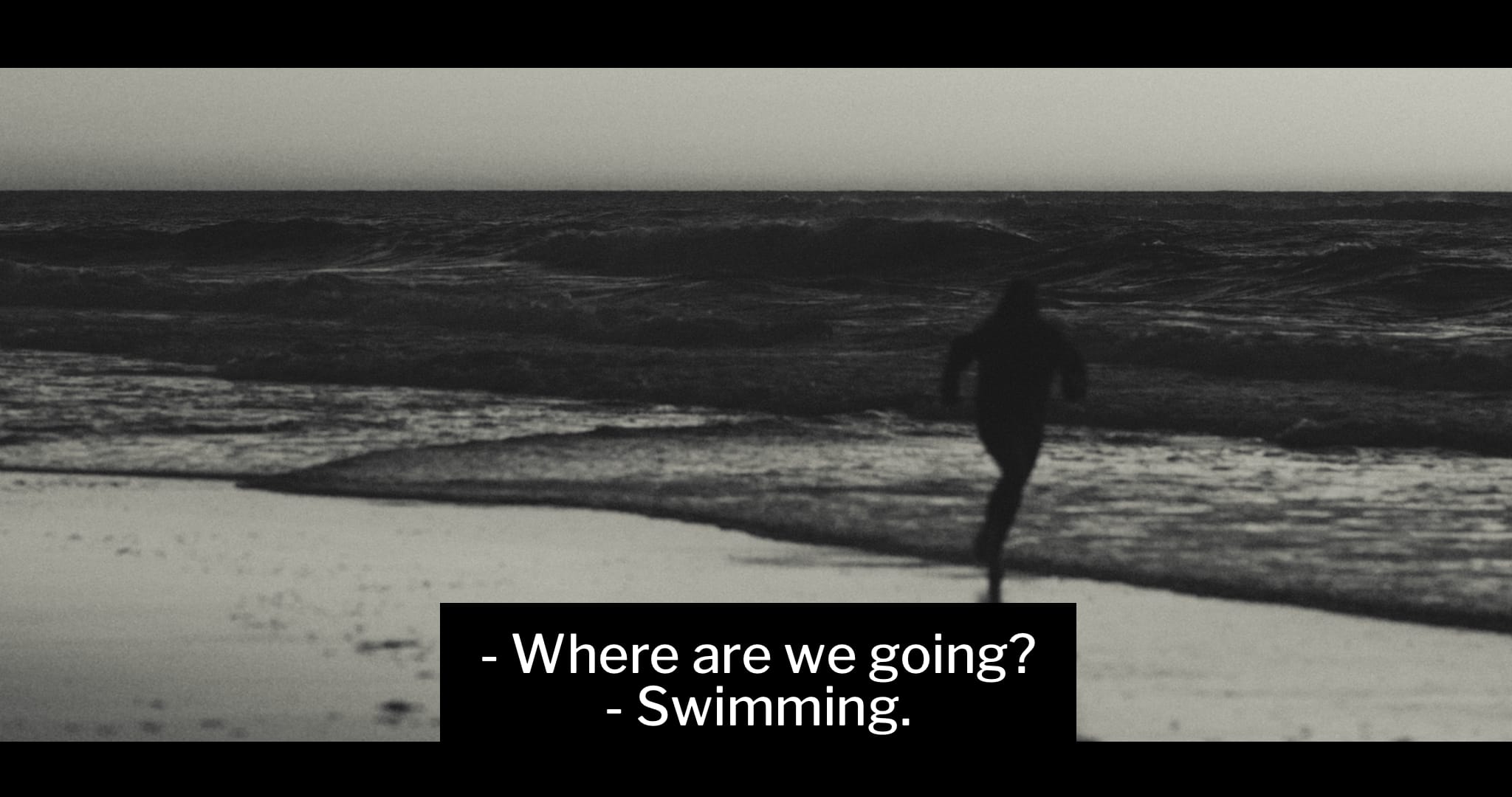
An example screenshot of Jaws (captions from Netflix)
Participants sometimes found it confusing and difficult to follow the visuals and captions at the same time, describing some scenes as “too fast” and that it was “stressful to pick out information”. When they felt there was too much to process on-screen, they told us that they couldn’t follow the plot or feel immersed in the film.
“ think visually, it was very busy. There was lots to try and take in. And I couldn't keep up with the captions [...] I was trying to work out visually what was happening and I couldn't. It didn't seem in sync, everything just seemed too much.” Participant 13, interpreted from BSL (The Hunchback of Notre Dame)