
 Follow Paper on LinkedIn
A carbon neutral workplace: our first steps in taking climate action
A key pillar of Paper’s strategic goals is to increase the sustainability of the organisation. The first step towards this is to reduce carbon emissions of our operational and business activities. To this end we have set a target to be Carbon Neutral by the end of 2022 and net zero carbon emissions by the end of 2025. Thus giving ourselves a measurable outcome we can hold ourselves accountable to.
Measuring emissions is not a perfect science, and can quickly become complex. Pretty much every business activity we do has a carbon impact - from the electricity we use to power our laptops, how we heat our office and home office, the waste we create, the water we use and how we commute to work.
To reach our first target of carbon neutrality, we first needed to calculate Paper’s carbon footprint to give us a better sense of where our greatest emissions come from… is it the electricity we use? Or the mode we travel to work? Or the heating of our office and home offices? Carbon neutrality is then reached by offsetting the amount of carbon those activities release into the atmosphere.
Our target:
To be carbon neutral by end of 2022 and net zero carbon emissions by end of 2025
Step One. Increasing our ecoliteracy
Let me set the scene a little before we get into the thick of things.
As a Service Designer, measuring and reporting on carbon emissions was a completely unknown field of knowledge and expertise. It required me to learn a whole new lexicon and its meanings, such as what an emissions factor is and the difference between it and emissions scopes. More on that shortly. It also required I search the dark dusty corners of my highschool maths memories in order to make the emissions calculations with the data I had gathered.
Notwithstanding, I began as any good designer might do, with enthusiasm and curiosity. I applied the skills of my trade to the challenge and took it one step at a time. First by building an understanding of the landscape through desk research and talking with experts, then deciding on a methodology through experimentation with the various formulas and frameworks presented by international organisations and finally gathering energy usage data from my colleagues to ensure we are being as accurate as possible.
Talk the talk, navigating a new landscape of jargon
As mentioned earlier there is a hefty lexicon of terms to learn in order to play in this space. Invariably (and thankfully) I discovered most whitepapers and articles written on this topic contained a glossary. And so I shall equip you with a basic glossary for key terminology found in this article:
Carbon neutral (and how to achieve it)
Our first target is to aim for carbon neutrality. This is done by calculating Paper’s carbon footprint to give us a better sense of where our greatest emissions come from… is it the electricity we use? Or the mode we travel to work? Or the heating of our office and home offices?
To reach neutrality when then need to offset the amount of carbon those activities release into the atmosphere - thus becoming carbon neutral. More on offsetting in a bit.
Net Zero carbon
This is a trickier beast to achieve and definitions do vary. My understanding is that to be Net Zero carbon, paper will need to measure, report and offset all relevant Scope 1, 2 & 3 emissions within a set timeframe. As well as evolve from matching emissions through offsetting projects to projects that actively remove carbon.
Emissions Scope 1, 2 & 3
To make the carbon footprint measurements - a company calculates the emissions created through various business activities. The GHG Protocol splits emissions into three distinct reporting scopes:
Scope 1 emissions
Direct emissions from sources owned or controlled by a company such as company vehicles and equipment. As a consultancy, we do not manufacture anything so this scope does not apply to any of Paper’s activities and thus we don’t need to report emissions here.
Scope 2 emissions
Are indirect emissions from purchased electricity, steam, heat, and cooling. For Paper this is the electricity we use to heat and cool the office and the energy to power office equipment.
Our supplier for office electricity is Ecotricity and provides 100% green energy – made from the sun, the wind and the sea, which means we won’t need to include Scope 2 emissions in our final calculations.
Scope 3 emissions
Paper became a hybrid workplace in 2020, with most staff working from home 4 days per week. Scope 3 includes emissions associated with working from home such as heating, lighting, equipment. Commuting to/from the office is also reported under Scope 3. We will be including these in our emission calculations and in fact these make up the majority of Paper’s emissions as a business.
Scope 3 also includes the emissions from waste management and water use. We are not as yet measuring these aspects, but plan to in the next financial year.
Emissions factor
The release of GHG into the atmosphere depends mainly on the activity and the product. In order to estimate GHG emissions per unit of available activity, we need to use a factor called emission factor (EF). An emission factor is a coefficient which allows the conversion of activity data into GHG emissions. We used up-to-date, UK specific factors for our calculations.
Calling on experts and communities
With a handle on the lexicon sorted, we then:
- Consulted with experts from Green Arch consulting who are specialist in helping businesses create frameworks to ensure sustainability is a part of every business decision to gain advice on our intended methods
- Learned from Gerry Mcgovern @ Camp Digital through great provocations asking us to consider ‘How can we reduce the use of digital products? And ‘How might we help people use touchpoints that have less of a carbon footprint?’
- Held internal workshops on ‘greening services’ in which we brainstormed how we might redefine the tools we use to map services to capture the key moments in user journeys where emissions are high or problematic. And we discussed how we might broach conversations with clients to support sustainability considerations within projects.
Walk the walk, deciding a methodology for calculating emissions
Yes, there are many platforms and consultancy services available today offering tracking and measurement functionality that remove the need for businesses to make a single calculation themselves. However, as a micro SME of 13 employees with predictable working patterns, I felt we could do the maths ourselves. Here at Paper we don’t shy away from steep learning experiences.
I began by looking at GHG Protocol - the gold standard for GHG accounting. While their method and technical documentation is really thorough and easy to follow, advice on calculating working from home emissions is limited. Given homeworking is where most of our emissions come from, I returned to Google for more options.
A search for ‘calculating working from home scope 3 emissions’ led me to the really helpful whitepaper by EcoAct ‘Homeworking emission Whitepaper 2020’. The methodology was clear and detailed and filled in the gaps left by the GHG Protocol.
Finally, the methodology and emissions factors provided by the Department for Business, Energy & Industrial Strategy within the UK Government was the last piece of the puzzle I needed as it provided up to date, UK specific emissions factors I could plug into the calculations.
There will be a follow up article that details how we experimented with these methodologies to find the best fit for our business and we’ll also show the details of our calculations.
Step Two. Gathering data and calculating emissions
We have the method, now we need the data
With the knowledge that Scope 1 emissions are not relevant for a consultancy such as Paper and our Scope 2 office emissions are already offset by Paper’s energy supplier’s 100% green electricity; the task at hand was to calculate our Scope 3 emissions created predominantly from home working and commuting.
To make the data more accurate for these calculations, we surveyed the team to find out:
- How many days they work from home
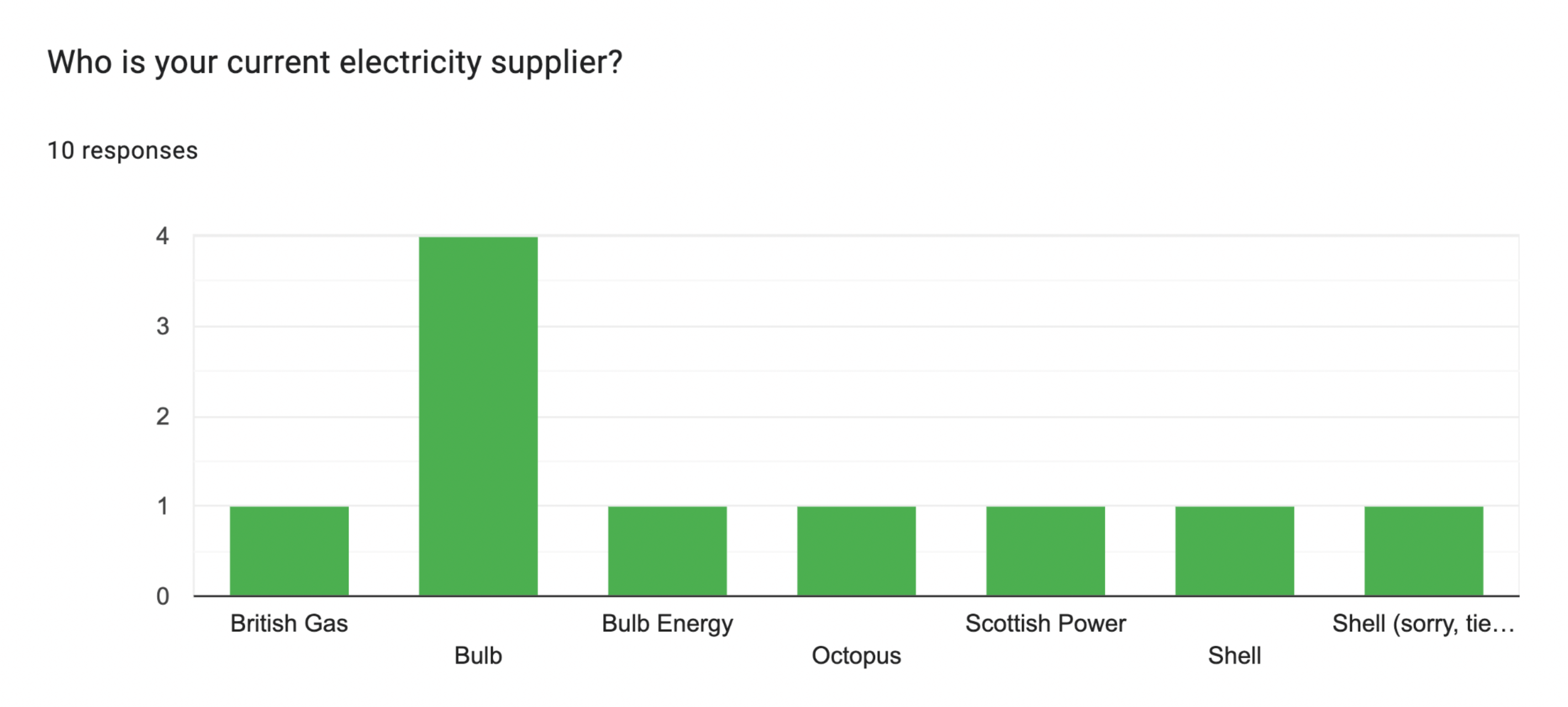
- Who their energy supplier is and what tariffs are they on
- How their homes are heated
- How they commute to the office and the distances travelled.
Our emissions calculations
Below results are for the reporting period Aug 2021 - Aug 2022 for all 13 Paper staff.
Working from home
Paper staff worked 4 of 5 days per week in the reporting period.
Home heating
69.2% of our home offices are heated with gas. The rest is a mix of electricity, oil and ground source heat pumps.
Home Office Heating:
Total emissions = 5 tonnes However, 75% of Paper’s staff are supplied by gas that is offset
This leaves Paper 0.75 CO2 tonnes of non-green gas to offset
Home electricity suppliers
All of the electricity suppliers used by Paper staff provide 100% renewable energy. Some have better green credentials than others and generate a percentage of their own energy from wind and solar. Most however claim they are matching energy use by purchasing REGOs.
Commuting
Paper people travel by either car, bus, train or bike to the office in Sheffield.
We travelled 33,738km last year = 2.8 tonnes CO2 to be offset by Paper
Summary from calculations
Electricity is already offset or green at the source/supplier so home and office equipment need not be included in the emissions reporting Commuting and home office heating are the biggest sources of emission we need to offset in order to reach carbon neutral.
The total Scope 3 carbon emissions Paper need to offset for this reporting period is = 3.5 tonnes CO2
Step Three: Making sense of this new view
From the start of this journey we had a task to look into carbon offsetting schemes and assumed we would look for some schemes that aligned with our values and we’d pay to offset past, present and future carbon emissions that we couldn’t prevent.
It sounded pretty simple, but when Jen (another service designer at Paper) looked into the options she realised how complex the whole system is, she also had some concerns too.
She collated what we had learned about offsetting schemes, concerns, and pros and cons of different types of schemes and suppliers here
In summary:
- There’s different types of offsetting schemes covering things like forestry and conservation, community projects, renewable energy and turning waste to energy
- Carbon credits are purchased to offset emissions. Prices vary from $10- $40 per tonne of carbon
- It’s a huge market with a lack of regulation
- There have been some reported instances of carbon projects that harmed local communities or resulted in more environmental damage
- There are certified schemes you can buy credits from such as the Verified Carbon Standard
- Some organisations may use carbon offset credits to achieve all (or lage parts) of their reduction goals rather than make the investment needed to reduce their footprint
After looking at the cost associated with purchasing carbon credits we realised it would cost only a small amount to be classed as carbon neutral with the 3.5 tonnes we have identified as requiring offsetting costing Paper £175 per year.
We tick the carbon neutral box by doing this, but neutrality is not our end goal, we don’t want to stop here.
This is just the beginning
While it’s satisfying to have learned the skills to calculate Paper’s carbon footprint ourselves, carbon neutrality was only ever intended to be the first step towards the sizable task of reaching net zero carbon emissions. This will require Paper to investigate Scope 3 emissions in more breadth in order to plan the roadmap to remove more greenhouse gas emissions than we are generating.
As consultants it is our intention to also think about how we can adapt or reimagine our design processes to provide the space for sustainability conversations to be woven into the design decision making culture within our client engagements.This path feels far less trodden and will require us to work boldly, collaboratively and creatively.
We’re REALLY interested to hear from those of you currently on this journey, either a business trying to make a change or an individual practitioner trying to work this stuff out. Say Hi