
 Follow Paper on LinkedIn
We’ve been doing talks in schools - how we’re learning from the students and adapting our approach
Why are we doing talks in schools?
We want Paper and the sector we work in, to be a welcoming place to work. We want to encourage more people from different backgrounds into the work we do. We want to open up the jobs we do to people that might not know they exist or understand what they mean.
We know that talking to students and children provides an opportunity to possibly, just possibly, influence the choices people make at a much younger age.
Where did this start?
We’ve been working with Sheffield City Council’s See it Be it campaign team since early 2021. We mainly catch-up with two people, Megan and Graham who have project office roles. They help us find schools, make contact with schools, provide guidance on what to expect in schools and even do DBS checks for us.
We’ve done more things too, including:
- Urska recording a video about being a designer
- Doing a series of talks at schools in Sheffield
- Joining monthly networking sessions where we hear from schools
- Mentoring with Forge Valley school as part of the Big Challenge
“Research indicates that 86% of young people are less likely to be unemployed or out of education after 4 or more employer encounters. Young people who benefit from employer engagement are likely to earn 18% more than their peers”. See It Be Campaign
So what do we talk about in schools?
We’ve done 3 talks so far at different schools in Sheffield and have 8 planned in total for this year. The key message of our talks is that none of us are doing what we thought we would be when we were younger and we want the students to know it’s ok to change their mind too.
We talk about…
- What we wanted to be when we were younger and what we are doing now
- What the schools teacher wanted to be when they were younger and their journey to becoming a teacher
- That it’s ok to change your mind
- How service design and research helps people do things
- The different roles at Paper
- Our journeys into our roles
- Some advice we could give our younger selves
We set the students a task
We wanted to give the students a task to do when we visited, we felt the best way to learn about something is having a go for yourself!
We set a task that the students could either work on individually or as a team, whichever they felt most comfortable with and designed a worksheet they could use. It’s a fairly simple exercise, but one we’ve found both students and adults have enjoyed doing.
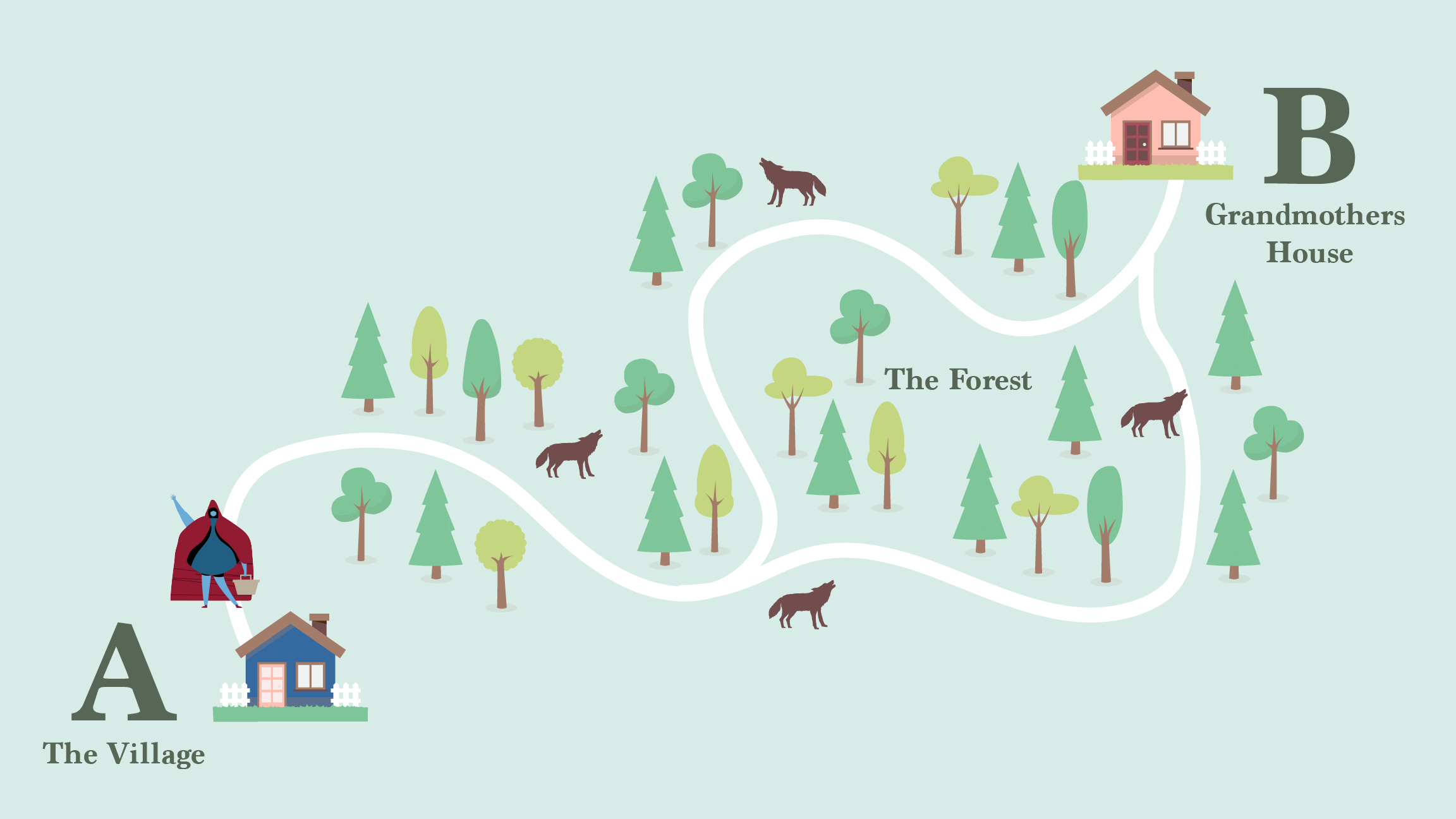
The task was based on the story of ‘Little Red Riding Hood’ Red, (as she likes to be known) lives in a village by a forest. She delivers baked food to her grandma who lives in the forest, but she often encounters wolves there. She thinks there must be a safer and better way for her and the rest of the village to deliver food.
Red has an idea for a baking delivery service. She has asked that we design a service that she and the other villagers can use to have their baking delivered through the forest, so that they can stay safe from the wolves.
We ask the students to imagine they had a genie in a bottle and could make anything possible. If they had all the money, time, people and things to solve this problem, what would they do?
The task always sparks up lots of conversation as the students work through the problem. It’s very interesting to hear their very creative ideas! We’ve found the students often think out of the box and also consider the use of future technology in their ideas too, one of my favourites being the use of a 3D food printer!
It also sparks up a lot of discussion about how they can consider how their service idea would affect the forest environment and the needs of not just Red and her grandma but also of the wolves too.
What did we learn?
After our first retrospective we felt that some parts of the talk could be made more interactive rather than us just talking to the students. We developed the part of the talk where we discussed what we wanted to be when we were younger so that the students could guess by putting their hands in the air and also looked to make slides more visual rather than just words.
We learnt that explaining service design can be a bit tricky and it challenged us to think creatively about how we could better explain what we do. We took a simple service that young people may be familiar with ‘buying food from a supermarket’ and displayed it in a simple map diagram showing each stage and showing which parts doing research or changing something could better help someone do what they needed to do.

We found the students really enjoyed the task we gave them at the end of the talk and many got involved and felt happy to share their ideas with us. We are going to allow more time to do this next time as well as having more time to chat and ask questions at the end.
Goody bags were a hit with the kids - who doesn’t love a goody bag? Inside the tote bags we had some stickers, notebooks, pencils and sweets. We also printed out some of the things we had talked about so they could go away and learn more about what we do.
How did we adapt our talks to better meet the needs of the students?
Some of our upcoming schools had students who were autistic or had learning difficulties so we researched how we could adapt the talks to better suit them.
We started by doing some research online and looking at the advice given by places such as the National Autistic society. We spoke to a Special Education Needs Co-ordinator and also spoke to the schools about what worked well in their lessons and applied their advice to how we designed the talks. We shared our findings with the team so that it could help them when delivering the talks but also to help them learn more about how to support autistic people they know or work with by adapting their communication styles - you can read our notes here.
We looked at each stage of the talk such as, learning there will be a talk, listening to the talk, partaking in interactive parts, doing the task right through to after they have left the talk. We looked for areas we could improve and make students feel more at ease and get the most out of it. We also developed a feedback form we could use with the teacher or students if they wanted to to give us feedback on how to improve the talks further.
One of the things we did to help students feel more comfortable arriving and listening to the talk was to design an agenda that the students could have in front of them in the talk with space for making notes or doodles. It details exactly what we are talking about and for how long and also reminds them that we want them to feel as comfortable as possible - that they are free to just listen, ask questions throughout and participate only if they feel able and comfortable to do so. At the next talk we plan to give this to the students ahead of time so that they may feel less anxious about attending.
What impact did it have on us?
We hoped the students would learn about the different roles available to them and that they might consider doing a role they hadn’t previously known about. Or just learning that there are so many different paths available to them and that it’s ok to change their mind. Even if just one student takes that away then we’ve made a difference. That feeling of doing something worthwhile cannot be underestimated.
We have really enjoyed putting these talks together and meeting the students and teachers. Not only is it a chance to practise our speaking and workshop skills but it’s an opportunity to visit schools and understand more about them and the students - something important to us as we have worked for a number of years designing and researching services for the Department of Education and hope to design more services that help young people in the future.
What are we doing next?
We have 8 talks in schools planned for this year. We are also inviting some of the students from our recent talk at Sheaf Training College to visit our studio and spend some time with us to have a look around our studio and do some tasks together. We’re keen to get involved with students and help them on their career paths and are always looking for new opportunities to help.
How can you get involved?
If you’d like to get your business involved in helping students you can find more information about the See It Be campaign here