
 Follow Paper on LinkedIn
Learning about Agile through Trello
I know about Agile. Of course I have been working in agile ways of working for the past 3 years and it is the core of our work, I have read all about it, I know it… Ow, how was I wrong…
Me and Trello
As part of our personal development at Paper we have mentoring sessions with one or more co-founders (Mark, Jon and Cam). I have mine with Mark and we have been learning about Service Design, understanding scope, work delegation, time management, transparency, products, transactions and many other things. To capture our work, inform other Paper team members of what we are doing and to track our progress, we have been using Trello (if you want to have a look at the tool you can do so here www.trello.com) and by now I already had an ongoing battle with using Trello on other projects I have been involved in.
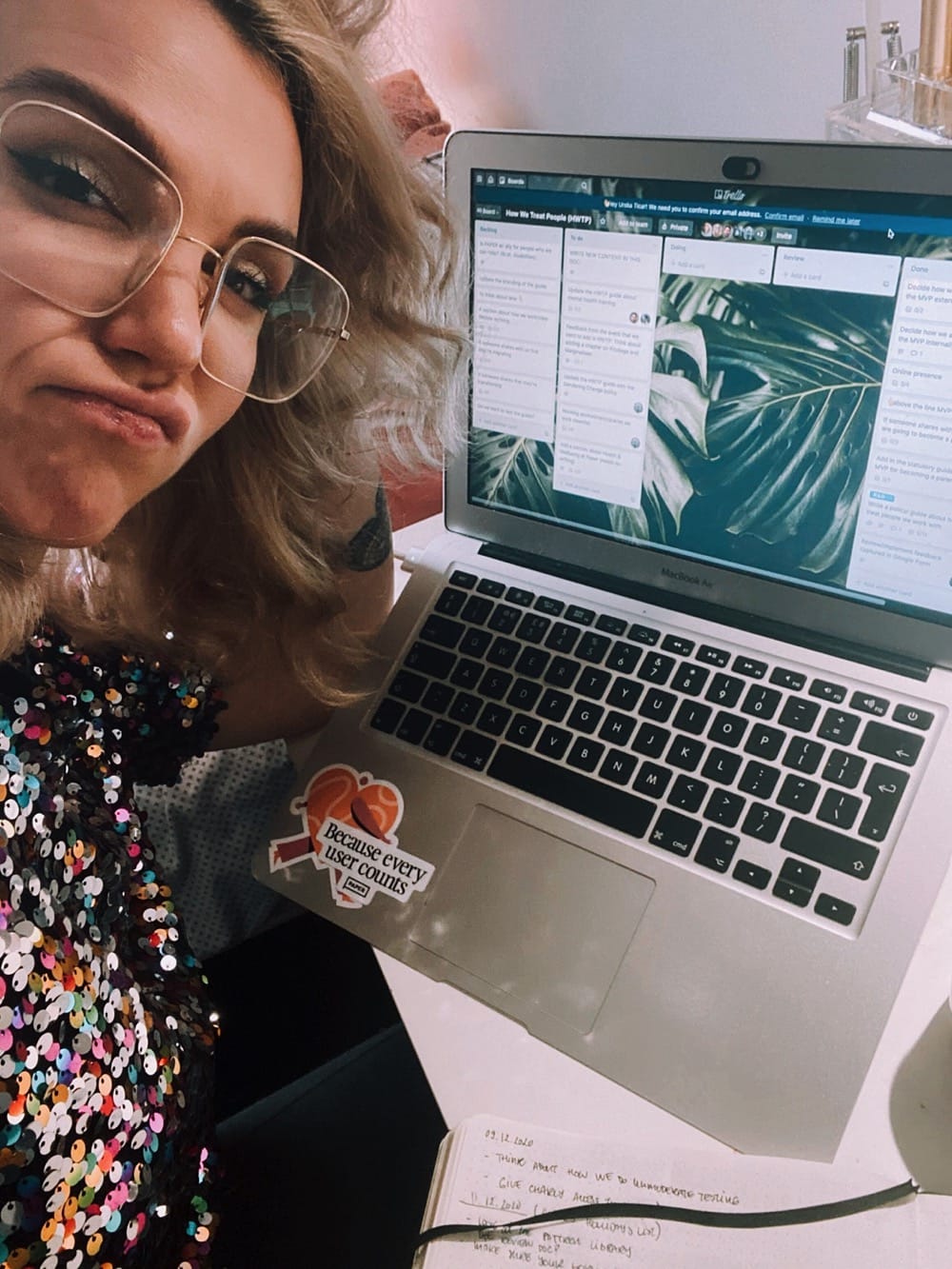
In principle Trello should be something I would love to use as it is an organisational tool that helps you sort out your work and make it all visible as well as labeled and organised into columns [digital Marie Kondo bliss]. Something that on paper I should love with a similar passion that I love Miro. But the love connection hasn’t happened [yet] and it took more of an opposite effect of resentment and hate of using it [I would love to say I didn’t threaten Trello with burning but I have].
Trello and Agile
As a magpie of a designer with my brain rushing from one shiny project trinket to another it feels very constraining and bureaucratic to put everything I do into tickets. The best way it can describe it is that it feels like I’m trying to put something into one box that doesn’t fit or possibly lives in multiple boxes and even in between boxes. I was frustrated and overwhelmed feeling constrained, not just with Trello itself but also with the way Agile felt like it was forcing these constraints on me through Trello. This amazing way of working that I believed I knew and love applying to my work now felt like a traitor constraining me through its tools.
Not giving up I tried to box my work into a Trello ticket to give it another try and be transparent with what I have been working on, I wrote what I’m doing and created a checklist of all the things I need to do to achieve the task. It felt right and it felt like I could “do Trello”.
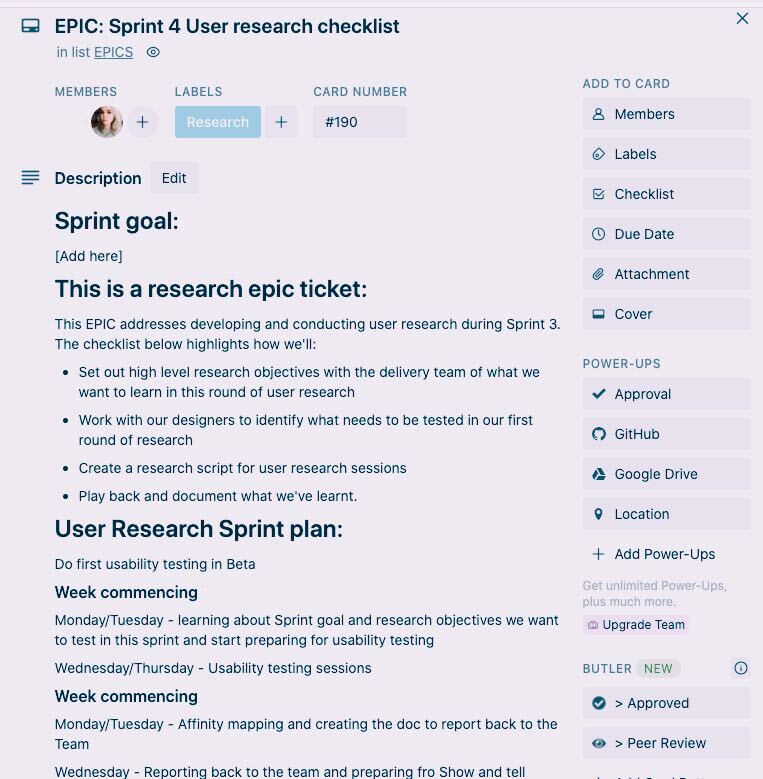
I thought I started to fall for Trello, until I was informed that my tickets are way too big and are epics (An epic is something big that should be broken down into a number of smaller things, often called tasks. For example: Moving house (an epic) Under that there’s many smaller tasks; arrange movers, contact solicitors, pack boxes, collect keys…). I was asked if I could make my tickets more granular and describe individual tasks that I have noted in my to do list in my big epic Trello tickets. I was back ready to give up on Trello, or at least put it back on my to burn list. It doesn’t feel intuitive to write every minute task as a Trello card, explain why I need to do it, how I will do it, when it will be done, and what do I need to do it so that it will be done!
The frustration was back and I was ready to give up making other people write my Trello ticket. Luckily I have spoken to Mark and he helped me and worked as a mediator not just between me and Trello but also between me and Agile.
Mark to the rescue
We use Trello so that we can inform other team members of what we are doing and how we are doing it so that we can collaborate, connect, be transparent and most importantly work in an agile way.
In principle Trello is a tool that supports Agile ways of working as it encourages people to think about individual tasks that aren’t time dependent on each other and can be picked up by team members who can then do them. The tasks not being time (linearly) dependent on each other supports Agile principles of quick testing, making and alternating the work that is done by the team [see I do know about Agile!].
The problem is that our whole life we have been mostly encouraged and taught to think and work in a linear way. Ways where our tasks are being dependent on each other and following each other in chronological time line as in only when you complete one task you are able to do another one. Just think about the way we get taught in schools, we don’t learn algebra before we learn how to add, subtract, multiply and divide. And don’t get me wrong, linear ways of working and thinking works for some things. Just think what would happen if cooks would be adding raw meat (that is meant to be cooked) just before they take their dish from heat and serve it?
Linear ways of working and thinking does work in certain cases (as mentioned examples above) but it definitely doesn’t work in Agile ways of working where one of the key elements of work are independent tasks that shouldn’t be chronologically dependent on each other. But time and time again linear ways of working and thinking creeps into our work. For example in my big Epic trello ticket I have listed my own tasks chronologically and they were time dependent on each other as my mind went into default linear way of thinking.
The best we can do is to try to be aware when linear ways of working and thinking is creeping into our work and try to mitigate that to stay on the Agile side of working. Ironically [in my case] Trello is a perfect tool to observe if still are on the right track.
Agile ways of working through Trello
We can observe and learn if our work is truly agile by observing how we are using Trello and we can start doing that right at the beginning when we are creating our tickets with this simple checks:
-
Is our task working around one thing and one thing only? Are you describing one thing or are you making an Epic? It might be easier to start with an Epic to gather everything that you need to do and get it out of your brain but make sure that you separate them after into smaller task tickets.
-
Is our task depending on other tasks or things? (if it is it shouldn’t be individual task)
-
Is our task already written down? (always check the Trello if what you are trying to put down is already been written and you just need to add on it or push that task forward)
-
Is the description of the task something that anyone would understand? (check in with someone who isn’t aware of the task and see if they would be able to pick it up without talking to you)
-
Am I just making a wish list? (this happens a lot when we are afraid to miss anything out so we capture / write everything down? Try to think if the task are something you can do and are important and what aren’t this is not easy and you learn with time, it’s worth checking on yourself when you are writing the tickets or see what hasn’t been prioritised in a while in your Trello board, if you find old ticket that have been sitting undone for a while it’s time to let them go)
What now? Do we have a happy ending? Did they fall in love?
Is not all good and lovely between me, Trello and Agile yet but we are getting to know each other better and we definitely get along more. I still prefer to write EPIC tasks first and then form the tasks that will actually be used when I’m talking / showcasing my work with the team. And I’m definitely still struggling with taking time to write the trello ticket but is getting better. Having a checklist
The list above helps me a lot making sure that this is all worth it and to know when my mind is trying to get back into linear ways of working and thinking to stear me back to the Agile path.
I’m still feeling a bit constrained with the whole process and I have been asking myself where is the space for creativity if everything needs to be in Trello tickets and unformed. For example I got inspired to write this article on the spot and it’s not on any trello ticket that I was going to be writing an article today. It happened spontaneously after my mentoring sessions with Mark and it feels a bit too late to start a ticket that I will be writing an article when I’m already doing it [I do promise Mark I will make a ticket for it, promise]. As well, it feels like my flow of being in the mood to write an article would be broken by taking the time to write the ticket before I write the article. But I understand the importance of transparency and informing the team of what needs to be done and what we are currently doing.

So yes there is still a lot of questions and uncomfortability not just around Trello but now Agile as well, but I’m very happy that I can comfortable express them and learn, go through them with my current project team (thank you Kath for all your patience and support as well as sorry for my frustrated moments) and Paper team (thank you Mark for listening to me and teaching me) at the end I’m sure I will learn to love Trello as well as stay on the path of Agile ways of working.